Checklist: How to Evaluate a Cobalt Mining Junior Before You Invest
October 09, 2026 - Market


October 08, 2026 - Market
September 30, 2026 - Uses

September 28, 2026 - Uses
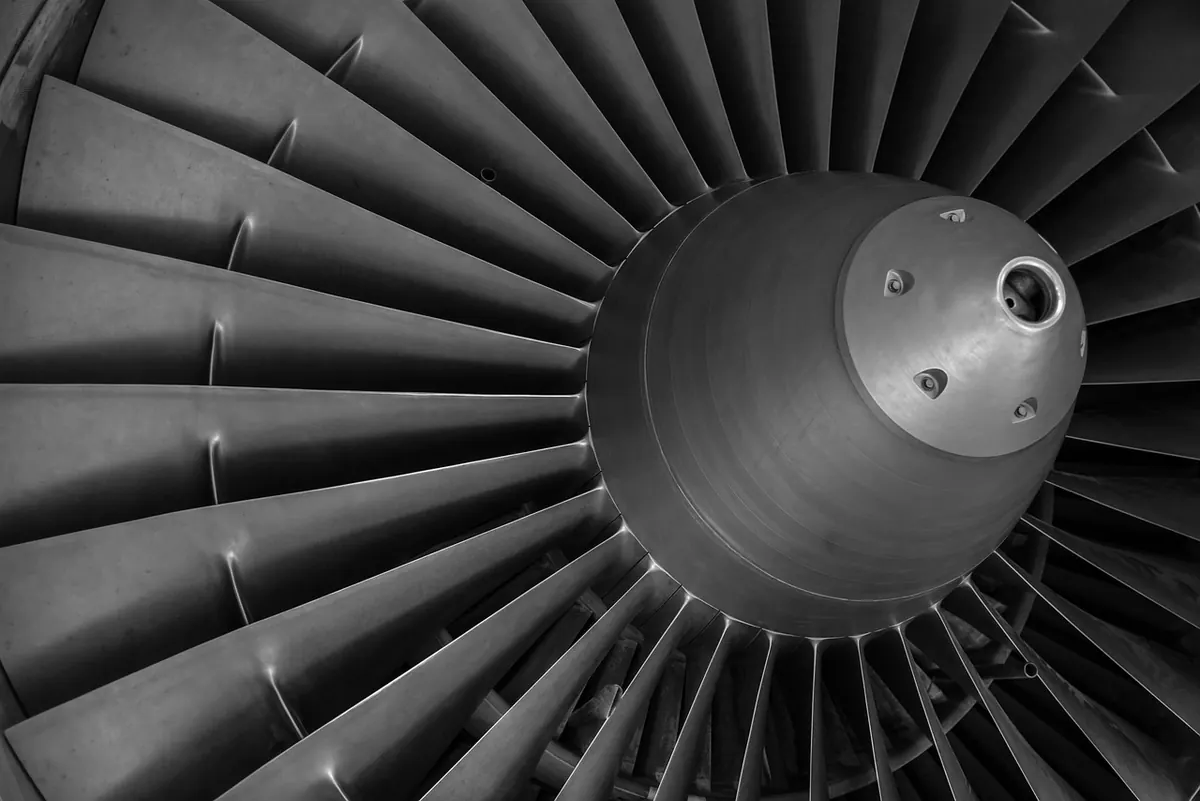
A jet engine is a controlled explosion wrapped in precision hardware. In the turbine, gases leaving the combustor are hot enough to soften ordinary steel, yet the blades continue to spin at high speed under centrifugal load. The metal must resist creep, oxidation, thermal fatigue and hot corrosion at the same time. Cobalt-bearing superalloys are one of the main reasons that remains possible.
Turbine blades, vanes, discs, combustor liners and transition ducts each see a different mix of temperature, stress and atmosphere. A high-pressure turbine blade may be cooled and coated, but its base alloy still carries the load. It must not stretch slowly under load — a process called creep — crack after repeated take-off and landing cycles, or corrode when salts and sulphur compounds in the air meet hot metal.
Designers use three main defences: alloy chemistry, internal cooling and thermal barrier coatings. Coatings and cooling buy temperature margin. The alloy underneath determines how much margin is available and how long it lasts.
Cobalt appears in jet engine alloys in two broad ways.
Most rotating parts are nickel-based. These alloys get their strength from a gamma matrix with gamma prime precipitates. Cobalt is added to many of these grades, often alongside chromium, aluminium, titanium, tungsten, molybdenum and tantalum. It dissolves in the matrix and helps keep the strengthening phases stable during long periods at temperature. It also contributes to resistance against hot corrosion. Examples include nickel-based turbine alloys such as Inconel 738 and René 80, which contain cobalt as part of their chemistry.
Cobalt-based alloys such as Haynes 188 and Stellite 6B are used where wear, galling and hot corrosion matter as much as raw strength. They are strengthened by solid-solution elements and carbides rather than gamma prime. That gives them excellent resistance to sliding wear and aggressive combustion environments. They often appear in combustor liners, transition ducts, vanes, seals, bushings and valve components.
Cobalt is not a single trick. It works through several mechanisms at once.
Removing cobalt sounds straightforward until you look at the whole component. A substitute must match strength, creep life, oxidation resistance, hot corrosion resistance, thermal fatigue, weldability, coating compatibility and repair procedures. It must also be qualified for flight, which takes time and testing.
Nickel alloys without cobalt can be made, but they often lose creep performance or hot corrosion resistance. Iron-based alloys cannot match the temperature capability of nickel or cobalt superalloys in the hottest sections. Ceramic matrix composites offer high temperature and low weight, but they are brittle, need environmental barrier coatings, and are difficult to join and repair. Refractory metals are dense and oxidise badly unless protected. Coatings extend life but do not carry structural load.
Single-crystal and directionally solidified blades reduce grain boundaries and improve creep life. They still depend on careful chemistry, including cobalt, to stabilise the matrix and precipitates. Additive manufacturing allows new cooling designs, but it does not remove the need for a proven alloy. In practice, substitution is usually a redesign, not a swap.
Engine overhaul shops care about more than original strength. They need to strip coatings, inspect for cracks, weld or braze repairs, and recoat. Cobalt-based alloys are often chosen for parts that need welding and wear resistance. Nickel-based alloys with cobalt may be harder to weld but can respond to heat treatment and hot isostatic pressing, which helps restore gamma prime after service.
Keeping cobalt-bearing scrap separate matters. These alloys contain valuable elements, and mixing them with lower-grade scrap wastes that value. Traceability also helps when a part is repaired or replaced, because the wrong filler or heat treatment can undo the alloy’s advantage.
If you are selecting, studying or specifying these materials, start with the failure mode.
Cobalt superalloys are not magic. They are a carefully balanced answer to a brutal combination of heat, stress and chemistry. That is why jet engines still depend on them, and why replacing them takes more than a change of recipe.
Photo: blickpixel / Pixabay

A practical due-diligence checklist for cobalt juniors: jurisdiction, management track record, cash runway and...
Cobalt prices move on more than battery demand. Here is how DRC supply, Chinese refining capacity, policy and...
October 08, 2026 - Market
September 30, 2026 - Uses
Copyright © 2026 Cobalt Guide. All Right Reserved.