Checklist: How to Evaluate a Cobalt Mining Junior Before You Invest
October 09, 2026 - Market


October 08, 2026 - Market

September 30, 2026 - Uses

September 28, 2026 - Uses
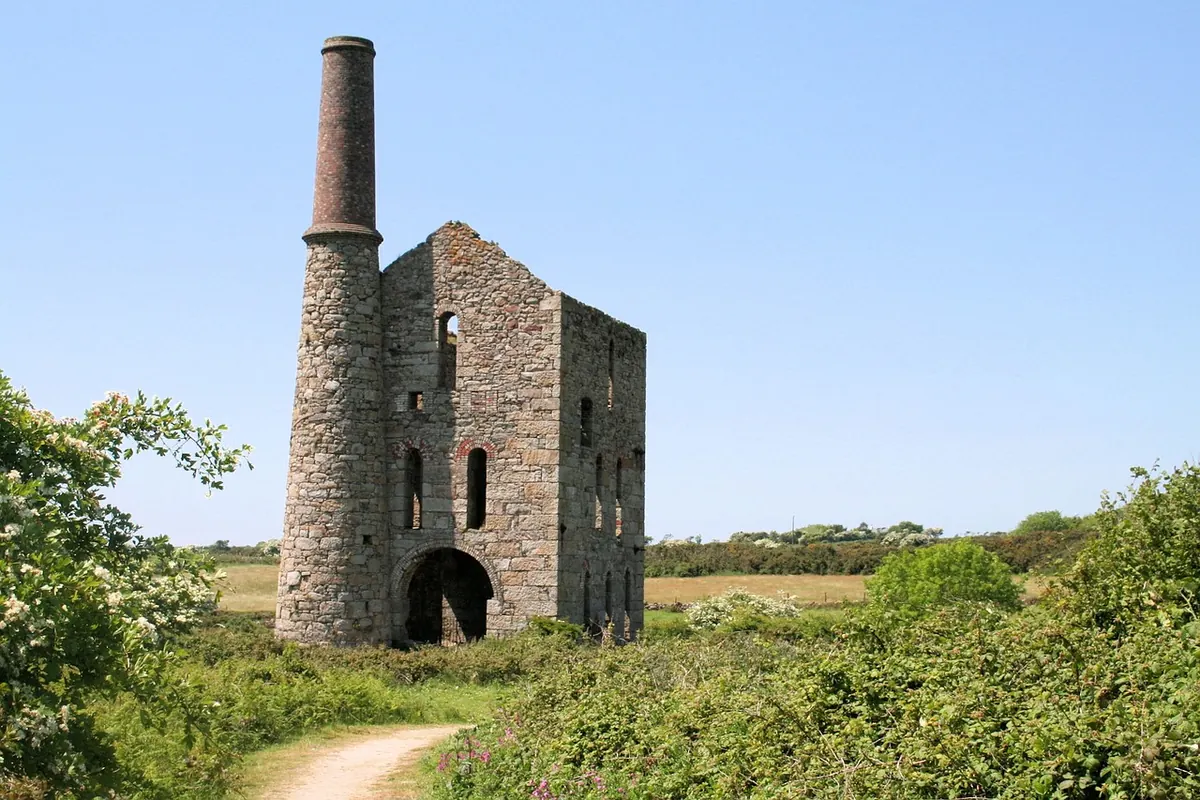
If you walk the windswept moors around Camborne or the clifftops near St Just, you are treading on ground that once helped colour the world. Long before lithium-ion batteries made cobalt a household word, Cornish miners were hauling cobalt ore to the surface. They weren't chasing battery metals. They wanted smalt, a deep blue pigment for pottery and glass, and they wanted arsenic, which often sat right alongside it.
The story of cobalt in Cornwall is not one of glittering success. It is a tale of marginal mines, toxic ore, and a market that swung wildly with imports from Saxony and later Morocco. Yet the physical traces remain. For the curious walker or the amateur mineralogist, Cornwall still offers a tangible link to a nearly forgotten industry.
Cobalt is rarely the main event in Cornish geology. It appears as a minor sulphide, often in association with silver, nickel, and arsenic. The famous Cornish cobalt mineral is skutterudite, a grey, metallic-looking ore that few would glance at twice. Miners encountered it in the deeper, hotter parts of the copper and tin lodes, particularly in the Camborne-Redruth district and around St Just.
The commercial driver was pigment. In the eighteenth and early nineteenth centuries, a good blue was hard to make. Ground cobalt ore, roasted and fused with sand and potash, produced smalt. Cornish smalt never dominated the market, but it found buyers among Staffordshire potters and Bristol glassmakers. When cheaper, higher-grade ore arrived from mainland Europe, Cornwall's cobalt ventures usually faltered.
There was a second, darker motive. Arsenic was a profitable by-product for use in sheep dip, taxidermy, and later, pesticides. Because cobalt and arsenic often occur together in the same veins, mining one frequently meant mining the other. This dual economy kept a few shafts open when cobalt alone would not have paid.
You will not find a neat "Cobalt Mine" on a modern Ordnance Survey map. The industry was scattered and episodic. The best place to start is with the larger copper and tin sett, where cobalt was a secondary product.
These are not tourist attractions with car parks and tearooms. Most are on private land, open moorland, or National Trust estates. Access is rarely a given. You need permission, and you need to respect it.
The honest answer is: not a great deal that says "cobalt" on it. The industry was small and its infrastructure was often shared with larger mines. What survives is the wider mining landscape.
You will see engine houses, of course. The iconic Cornish engine house at Wheal Peevor or East Pool Whim is not there because of cobalt. It served tin and copper. But the same shafts that those engines drained also produced the cobalt ore. The spoil heaps, or "deads," are the real field guide. Look for grey, metallic fragments in the arsenic-rich tips. Skutterudite is not brightly coloured like malachite or azurite. It is easy to miss.
At sites like the Botallack cliffs, the arsenic works themselves remain: calciner flues, condensing chambers, and low stone walls. These are brutal, beautiful structures. They also serve as a reminder that the men, women, and children who worked here were exposed to arsenic dust daily. If you visit, do not take specimens from the flues, and wash your hands thoroughly before eating.
Before setting out, pack accordingly. This is not a hobby for a sunny afternoon with sandals.
Cornwall is no stranger to mining revivals. South Crofty has seen repeated attempts to restart tin production. Lithium exploration in the county has attracted serious money. Cobalt is a different proposition. The grades in Cornwall are low, the deposits are narrow, and the mineralogy is complex. You cannot simply reprocess old spoil heaps at a profit; the cobalt is locked in refractory sulphides and arsenides.
That said, modern demand has changed the calculus. Cobalt is critical for many battery chemistries, and the supply chain is concentrated in the Democratic Republic of Congo. Any domestic source, however small, attracts interest. Exploration companies have taken licences across the South West, including areas with historic cobalt showings. They are not mining yet. They are sampling, drilling, and modelling.
The barriers are significant. Planning permission for new workings in a UNESCO World Heritage landscape is a high hurdle. Water treatment, arsenic management, and community consent all cost money. A revival, if it comes, would likely be small-scale and technologically driven, not a return to the 19th-century boom.
Cornwall's cobalt field is a patchwork of clues. It rewards patience, local knowledge, and a willingness to look at dull grey rocks rather than glittering prizes. Before you go, check the Cornwall and West Devon Mining Landscape World Heritage Site guidelines. Stay on public footpaths. Never enter adits or shafts. The air in old workings can be poor, and the rock is often loose.
If you find a promising specimen on a legal, permitted spoil heap, record the location and take a photograph. That information is more valuable to historians and geologists than another rock in a drawer. And if you are considering any commercial venture based on these old workings, from mineral collecting to exploration, take professional geological and legal advice. The ground here is rich in history, but it is also rich in hazards.
The UK's historic cobalt field is not dead. It is quiet. For now, that quiet is best enjoyed on foot, with a keen eye and a respectful distance.
Photo: MikeMcC / Pixabay

A practical due-diligence checklist for cobalt juniors: jurisdiction, management track record, cash runway and...
Cobalt prices move on more than battery demand. Here is how DRC supply, Chinese refining capacity, policy and...
October 08, 2026 - Market
September 30, 2026 - Uses
Copyright © 2026 Cobalt Guide. All Right Reserved.